| Advanced Filmmaking Program: |
| |
Camps in NEW YORK CITY & LONDON, UK |
| |
Teens (14-18) Can EARN COLLEGE CREDIT |
| |
Shoot using High Definition (HDV) or 16mm Cameras |
|
Already have filmmaking experience? Take our Advanced Filmmaking Program.
SOCAPA's Advanced Filmmaking Program is geared towards students with prior film or video experience. The program is competitive and requires applicants to submit at least one completed film or video project and a short film treatment (story idea) for review during our selection process.
Students accepted into the Advanced Program will focus on making two longer, more polished films that they can afterwards submit to agents and film festivals world-wide. In addition to advanced classes in directing, cinematography, sound, and digital editing, a strong emphasis will be placed on workshopping story ideas and scripts in writing class and working with actors in directing class. Students will receive extensive one-on-one advisements from our seasoned staff of instructor/filmmakers all of whom have experience at festivals and with agents.
Curriculum:
Film Festivals and agents like short films to be just that - short. Festivals, which like to showcase as much talent as possible, prefer shorter films because they can program more of them into a given time slot, thus exposing their audiences to more stories by more filmmakers. Agents like shorter films because they can watch more of them in a given day and thus expose themselves to more talent per second than by watching longer films. Agents would even prefer two good eight-minute films by the same director than one good twenty-minute film because in two separate films a director can show a broader range of styles.
Thus, it is our steadfast belief that our students should keep their films under 10 minutes in length. The idea is this: if you can show that you can write creatively, cover scenes visually, and elicit strong performances from actors in an eight minute short film, then you can do it in a twenty-minute film or even a feature-length film. Short films are more economical to make and are more likely to be watched by agents, festival programmers and even your friends and family.
Advanced Filmmaking Students make two 6- to 8-minute films in the three-week program.
|

|
1) The Hitchcock Film: Alfred Hitchcock was a master of visual storytelling. He would often convey information using a single silent shot that it would take a lesser filmmaker pages and pages of cumbersome dialogue to get across. In this film, students are encouraged to take a visual approach to telling their stories. Dialogue should be used sparsely, if at all. Instead, we urge students to use composition, camera movement, shot selection, blocking, lighting, color and nonsynchronous sound to convey meaning.
|
|

|
2) The Kazan Film: Co-founder of the famous Actor’s Studio, the breeding ground for "The Method", Elia Kazan is considered one of the great actor’s directors. Twenty-one of his actors have been nominated for Academy Awards and nine have won. Under his guidance, actors like Natalie Wood and Carol Sue Baker soared to levels of performance that they could not match before or after. In this culmination film, we challenge our Advanced Students to elicit the best and most truthful performances they can from their cast without losing sight of all they have learned about visual storytelling.
|
Advanced Filmmaking Schedule:
Writing, Directing:
In the mornings, SOCAPA students take their main Writing and Directing Classes. In Writing Class, students generate ideas, workshop their scripts and screen film clips that help communicate their style and vision. In Directing Class, they explore advanced techniques of film language, camera placement, and shot construction, and are introduced to "The Method" and other techniques of communicating with actors. Through a combination of hands-on camera exercises, close analysis of film clips, and rigorous exploration of traditional and modern film technique, the teachers quickly prepare the students for the production of their two Advanced Films.
Acting & Cinematography:
In the afternoons, the students break up into two separate groups: one for Acting and the other for Cinematography.
| I have to act to live. |
|
-Sir Lawrence Olivier
|
Acting Focus:
The Acting students spend the next 3 to 4 hours learning the basics of film acting. They work on vocal and physical exercises, and almost immediately have their first in-class performances captured on camera, so that they can determine precisely what they have to improve. Film and video are unforgiving in the way they reveal an actor’s performance, and we at SOCAPA believe that it is important to get our young actors in front of a camera as soon as possible. The Acting focus students also spend a good deal of time reviewing the merits and faults of the various New York methods. In this way, we hope to teach them about the current state of American film performance.
| A film is never really good unless the camera is an eye in the head of a poet. |
|
-Orson Welles
|
Camera Focus:
In the Cinematography class, we introduce the Camera students immediately to the 16mm film and digital video cameras that they will use. The first class is devoted to learning all aspects of our top-of-the-line 3-chip prosumer DV camera, as well as shooting exterior exercises and projecting them in class. In the second class, on Tuesday, the students learn how to light interiors for video, and also shoot and project in-class exercises. As the program progresses, students will have the opportunity to use higher end cameras, dollies and a steadicam.
Production:
Starting in the second week, the Advanced Filmmaking Students shoot their first films. Everyone directs his or her own movie, working in a crew of three or four students. The acting duties are divided among the acting focus students, and the cinematography/sound duties are divided among the camera focus students. In this way, 3 to 4 films per crew are shot each week.
Editing:
At the end of the second week, students learn the latest Final Cut Pro editing software and cut their films, under the direct supervision of their instructor, right in class. Extra editing time is available for those who need it.

Culmination Film:
The third week is devoted entirely to shooting and editing their culmination film. Students will workshop their scripts in their writing class and workshop specific scenes form their scripts in their directing actors class. One-on-one story and producing advisements are held with their instructors.
Master Classes:
At least once per session, SOCAPA invites a top young industry professional from the New York or Hollywood film or performing arts scene to come to campus and lead a master class for all students, regardless of focus. Some past guests included actor Brendan Sexton III (Empire Records, Welcome to the Dollhouse, Hurricane Streets), actor Dwight Ewell (Chasing Amy, Dogma, Flirt), filmmaker Peter Sollett (Raising Victor Vargas, Five Feet High and Rising), actor Sarah Clarke (TV show "24," Thirteen) screenwriter Andrew Marlowe (Air Force One, End of Days, Hollow Man), director Morgan J. Freeman (Hurricane Streets, American Psycho II, Desert Blue, Just Like the Son), and comedian Matt Walsh ("The Daily Show," Bad Santa, Upright Citizens Brigade).
College Credit:
On the final Friday afternoon of the three-week program, SOCAPA holds its "Showcase Festival" followed by a reception for friends and family. All the acting reels, photography slides, music videos and student films are shown on the giant silver screen. In addition to the projected work, there are live dance performances, actor monologues, and a photography exhibit. We encourage you to invite your fellow collaborators, friends and family. Although we do have a final live performance/film screening of all the two-week work just for the camp, please note that students in the two-week program do not have a final showcase festival for friends and family.
Extra-Curricular:
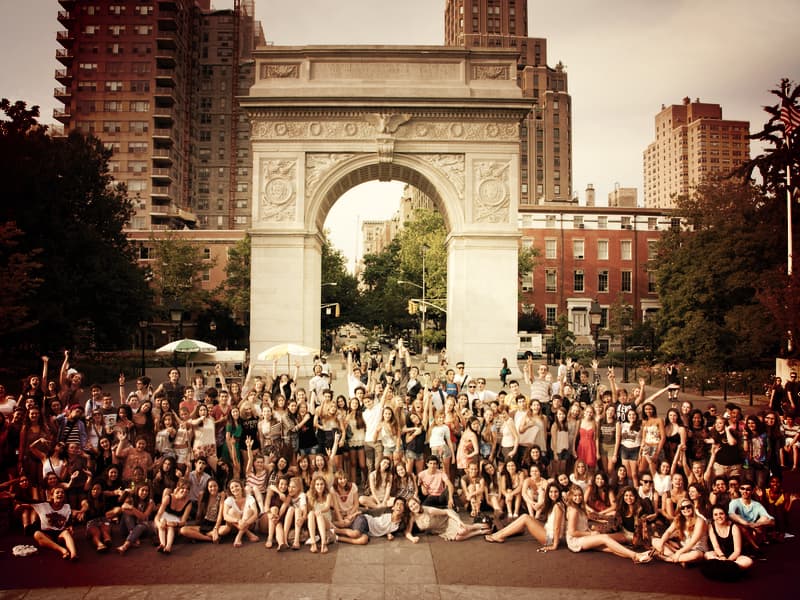
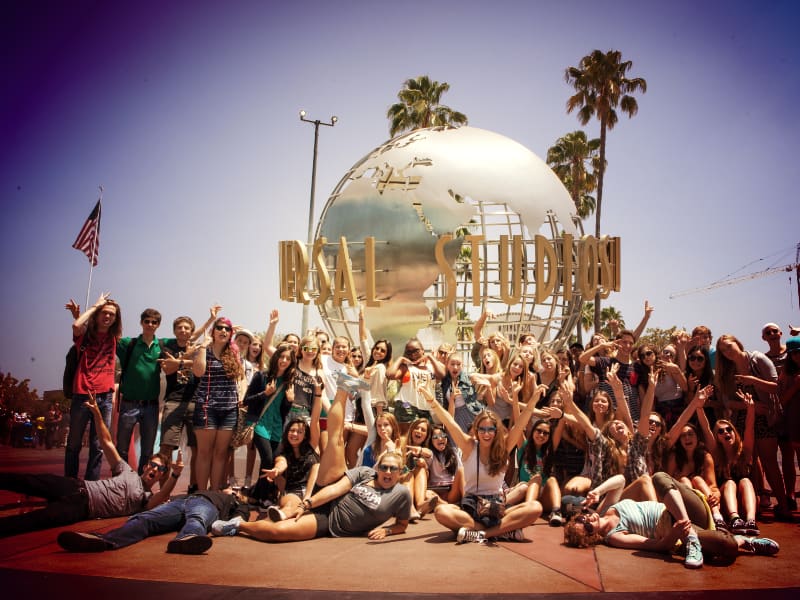
We at SOCAPA believe that you should work hard and play hard. Discipline and drive are two of the most important attributes of all successful artists, but hey, what's a summer without the beach? Every evening, Monday through Friday, we plan an activity for the students, whether it be a barbecue on campus, a dinner in the city, a cool-off swim, a theater/musical performance, or a film screening. On the Saturday afternoons that are not devoted to shooting and performing, we organize a group excursion. This could include a trip to a museum, the beach or a Broadway show. Past evening and Saturday excursions have included trips to Coney Island Amusement Park, live tapings of MTVs "TRL," Shakespeare in the Park, shopping in SoHo, Unity Sessions Hip-Hop Concert in Prospect Park, Universal Studios, Pilobolus Dance Group at the Joyce Theater, Jones Beach, Off-Broadway Shows De La Guarda, Stomp and Rent, Six Flags Amusement Park, Fourth of July Fireworks, and Bryant Park Film Screenings, to name a few.
All work and no play makes Jack a dull boy.
|
|
-Jack Nicholson, "The Shining"
|
|
 |
|